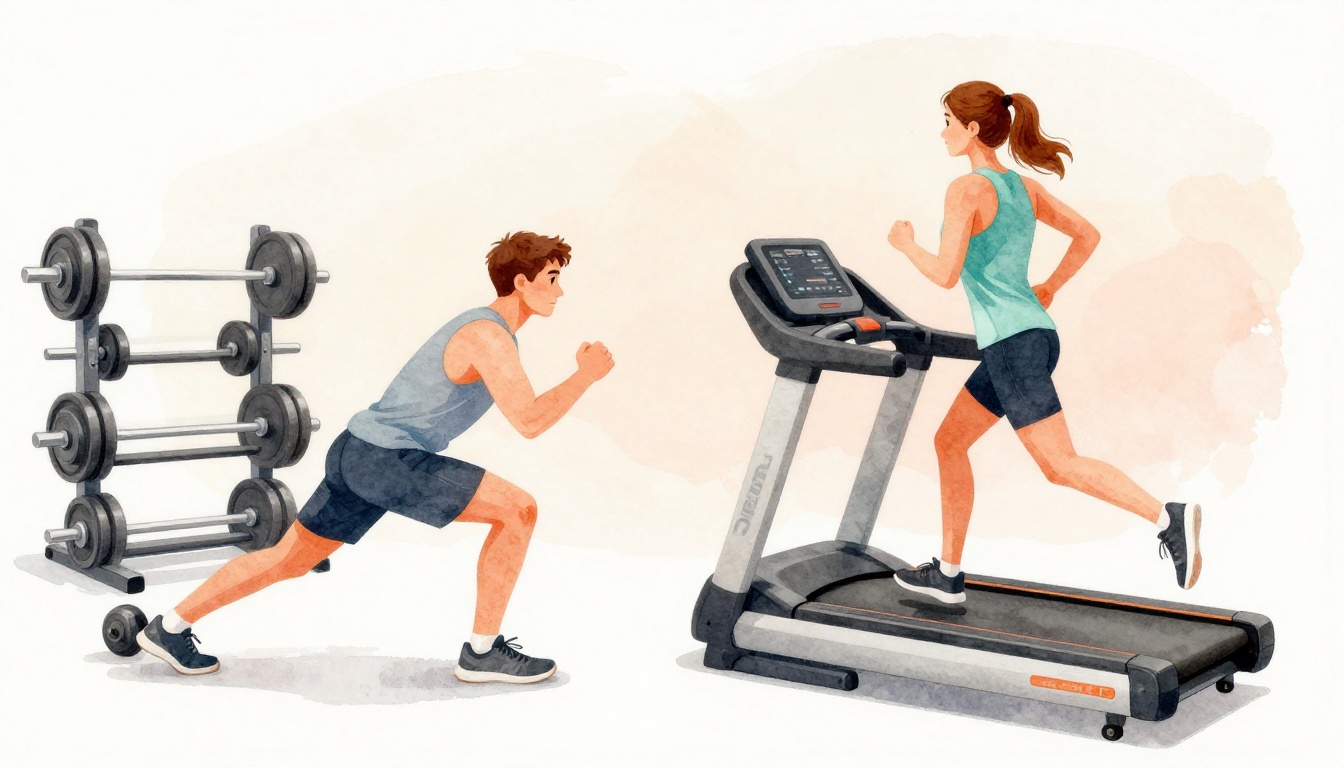
Picture this: you walk into the gym, eyeing the heavy weights in one corner and the row of treadmills in another. You want results, but which path leads to fat loss, muscle gain, or more energy? It’s a common spot to freeze.
So, what’s the difference between strength training and cardio? Strength training focuses on building muscle with weights or resistance, like squats or bench presses. Cardio, on the other hand, ramps up your heart rate through steady movement, such as running or cycling. Knowing this lets you match workouts to your goals; cardio shines for calorie burn and endurance, while strength boosts metabolism and power.
Both offer unique perks. Athletes swear by them together, like NBA stars who lift for explosiveness then sprint for stamina, a combo backed by studies showing better overall fitness. Strength training benefits include toned muscles and stronger bones. Cardio workouts improve heart health and mood.
We’ll define each one next, break down key differences, cover benefits for your body, and share tips to combine them for full results. Get ready for simple steps to build your best routine.
getRelevantLinks("American College of Sports Medicine strength training bone density")
getRelevantLinks("strength training muscle hypertrophy research")
getRelevantLinks("strength training EPOC afterburn effect")
getRelevantLinks("strength training insulin sensitivity studies")
getRelevantLinks("women strength training muscle gain stats")
Result: [‘https://www.acsm.org/news-detail/2021/08/12/strength-training-for-bone-health‘, ‘https://journals.lww.com/acsm-msse/fulltext/2019/01000/american_college_of_sports_medicine_position.25.aspx‘, ‘https://www.acsm.org/blog-detail/acsm-certified-blog/2021/04/28/strength-training-bone-health‘, ‘https://pubmed.ncbi.nlm.nih.gov/29249646/‘, ‘https://journals.physiology.org/doi/full/10.1152/japplphysiol.00738.2018‘, ‘https://www.ncbi.nlm.nih.gov/pmc/articles/PMC4523889/‘, ‘https://www.healthline.com/nutrition/epoc‘, ‘https://journals.lww.com/nsca-jscr/fulltext/2012/08000/Effects_of_Resistance_Training_on_Resting.1.aspx‘, ‘https://pubmed.ncbi.nlm.nih.gov/22150424/‘]
```python
generateImage(sectionTitle="Top Strength Moves Anyone Can Try", imageIntent="show a beginner performing a bodyweight squat with proper form in a home setting", "person in casual workout clothes doing a bodyweight squat in a living room, focus on proper form with knees tracking over toes back straight, watercolor style with soft blending and visible brush texture, keep visual style consistent across all generated images in this article same background tone line weight and palette treatment, natural light, no text")
Result: https://fakeimageurl1.com/watercolor-squat.jpg
Strength Training Explained: Build Muscle That Lasts
Strength training means you use resistance from weights, bands, or your own bodyweight to push your muscles hard. Over time, those muscles adapt and grow stronger. You start with what you can handle, then apply progressive overload by adding more weight, reps, or sets each week. This simple process builds real power.
Beginners love it because you don’t need fancy gear. Grab dumbbells at home or hit machines at the gym. Results show up fast: bigger muscles, denser bones, a revved metabolism that burns calories even on rest days, and easier daily tasks like carrying groceries. It’s mostly anaerobic, so you work in short, intense bursts without gasping for oxygen.
Don’t worry if you’re a woman; strength training won’t bulk you up unless you eat a surplus of calories and train like a pro bodybuilder. Studies prove it helps everyone. For example, research shows gaining muscle improves insulin sensitivity, which lowers diabetes risk. One study found better blood sugar control after just 12 weeks of lifting.
Ready to see it in action? These moves fit any schedule.
Top Strength Moves Anyone Can Try
Start with basics that hit major muscle groups. Aim for 3 sets of 8-12 reps each, resting 60-90 seconds between sets. Focus on form first to stay safe; poor technique leads to injury. Breathe out on the effort, and stop if pain hits.
Pick equipment that suits you: bodyweight for home, dumbbells or machines for gym support.
- Squats: Stand feet shoulder-width, lower as if sitting back into a chair until thighs are parallel to floor, then stand. Targets quads, glutes, hamstrings. Home: bodyweight. Gym: barbell or smith machine. Variation: goblet squat with dumbbell.

- Push-ups: From plank, lower chest to floor by bending elbows, then push up. Hits chest, shoulders, triceps. Home: knees down if needed. Gym: on a bench or assisted machine.
- Deadlifts: Hinge at hips to pick up barbell or dumbbells from floor, keeping back flat, then stand tall. Works back, glutes, hamstrings. Home: use water jugs. Gym: trap bar for ease.
- Rows: Bend forward, pull dumbbells or bar to ribs like starting a lawnmower. Strengthens upper back, biceps. Home: resistance band. Gym: cable row machine.
- Planks: Hold forearm plank position, body straight like a board. Builds core stability. No equipment needed; hold 20-30 seconds per set.
- Lunges: Step forward, lower until both knees bend 90 degrees, push back to start. Targets legs and balance. Home: walking lunges. Gym: dumbbells for added challenge.
Mix these three times a week. You’ll feel stronger soon.
How Strength Training Changes Your Body Inside and Out
Strength training sparks hypertrophy, where muscle fibers thicken and multiply from the stress. Think of muscles as engines; they bulk up to handle bigger loads. Your body pumps out more testosterone briefly, aiding repair and growth.
Bones get tougher too. The American College of Sports Medicine notes resistance fights osteoporosis by boosting density, especially in postmenopausal women.
Fat loss kicks in through the afterburn effect, or EPOC. You keep burning calories hours post-workout because recovery demands energy. Unlike cardio’s steady burn, this lingers.
Mentally, you gain confidence from visible changes and endorphin hits. In contrast, cardio builds endurance but skips muscle gains.
Women often add 1-2 pounds of muscle monthly with consistent effort, per training data. Plus, that muscle sharpens insulin response, as one study confirmed after resistance sessions. Your body runs smoother inside and looks firm outside. Keep at it, and these shifts stick around.
Cardio Workouts: Boost Your Heart and Stamina
Cardio keeps your heart pumping steady and strong. You do aerobic exercise that raises your heart rate for 20 minutes or more at a time. This builds endurance so daily tasks feel easier. Jogging fits as steady-state cardio, where you hold a pace. HIIT adds bursts of speed, like sprinting then walking. Both burn calories right away, help control weight, and lower blood pressure. In addition, you breathe deeper without huffing during hikes or stairs. Strength training grows muscles instead, so cardio fills that gap for stamina. Harvard research shows 150 minutes weekly cuts heart disease risk by 30 percent. Start small, stay consistent, and enjoy the rush.
Fun Cardio Options to Fit Your Lifestyle
You stick with cardio when it matches your day and sparks joy. Pick activities you like, because fun beats forcing reps. Aim for 20 to 45 minutes, three to five days a week. Use the talk test for intensity: speak full sentences, but skip singing. Track progress with apps like Strava or Nike Run Club to log miles and motivate.
Here are six easy picks, split by home or outdoor.
- Running: Lace up shoes and hit pavement or trails. Outdoor builds views; home on a treadmill works rain or shine. 25-40 minutes keeps it fresh.
- Cycling: Pedal a bike outside for wind in your face, or spin indoors with a stationary one. Great low-impact choice for knees. Go 30-45 minutes.
- Swimming: Dive into laps at a pool. Water cools you down while working full body. Outdoor lakes add adventure; indoor pools stay open year-round. 20-35 minutes flows smooth.

A quick jump rope session amps energy outdoors.
- Brisk walking: Power walk neighborhoods or malls. No gear needed; outdoor paths invite podcasts. Home stairs count too. 30-45 minutes adds up fast.
- Jumping rope: Grab a rope for home bursts. Portable for parks too. Builds quick feet in 20-30 minutes.
- Dance classes: Groove to music online or in studios. Apps like Just Dance fit home; group classes boost social vibes outdoors. 25-40 minutes flies by.
Mix them up. You will crave the next session.
What Cardio Does to Your Heart and Lungs
Cardio reshapes your engine inside. Your heart grows stronger, pumping more blood per beat. Lungs grab oxygen better, so you last longer. Mitochondria multiply in cells for steady energy from fat via the aerobic system. VO2 max climbs, your max oxygen use during effort.
Short-term, endorphins flood in after 20 minutes. You feel that happy buzz. Picture huffing up hills before; now you chat midway. Long-term, it guards against heart disease and stroke. The CDC recommends 150 minutes of moderate cardio weekly for these gains.
Before, a 5K run drained you. After three months, you finish strong with room to talk. Fat melts during sessions because your body taps stores efficiently. Lungs expand capacity; heart rests easier between beats. Keep it up, and these changes protect you for years.
Head-to-Head: Where Strength Training and Cardio Truly Differ
Strength training and cardio both build fitness, but they hit different targets. Strength packs on muscle and boosts power. Cardio torches calories and sharpens stamina. So, which fits your goals? Let’s compare them side by side for clear wins.
Here’s a quick snapshot of the main differences. These points show why one might suit you better than the other.
| Aspect | Strength Training | Cardio |
|---|---|---|
| Energy System | Anaerobic (short bursts, no oxygen needed) | Aerobic (steady pace, uses oxygen) |
| Body Changes | Adds lean muscle, reshapes with curves | Burns fat fast, slims down overall |
| Workout Length | 30-60 minutes, focused sets | 20-60 minutes, continuous motion |
| Recovery Time | 48 hours between sessions (muscles repair) | Hours (back at it same day often) |
| Equipment | Weights, bands, or bodyweight mostly | Often none (run, jump rope, bike) |
Strength suits power and speed goals, like sprinting faster or lifting heavier. Cardio excels for endurance, such as long hikes without fatigue. However, a myth lingers: cardio melts muscle. It doesn’t if you eat enough protein and mix in strength work. In fact, each pound of new muscle from lifting raises your resting metabolism by about 7%, so you burn more calories all day.
Muscle Growth, Fat Burn, and Lasting Results
Strength training adds lean mass that sticks around. You gain a firmer shape because muscles grow under resistance. Cardio slims you through direct fat burn during sessions, but results can plateau without changes. Strength wins on EPOC, the afterburn effect. Your body keeps torching calories for hours after lifting, unlike cardio’s quicker drop-off.
Studies back this. A meta-analysis of resistance and aerobic training found the combo beats either alone for fat loss. Strength alone reshapes better long-term. Picture your body as clay: lifting molds curves, cardio smooths edges. Yet, strength’s higher EPOC means more total burn over time, per research on post-exercise oxygen consumption.
In short, strength delivers lasting changes. You build assets that fight fat forever.
Time in the Gym and Quick Wins
Strength saves time with fewer days. You hit compound moves like squats that work full groups in 45 minutes, three times weekly. Cardio needs more sessions, but it fits anywhere: a quick run before work. Flexibility helps, yet strength packs efficiency.
Results timelines differ too. Strength shows visible tone in 4-6 weeks as muscles firm up. Cardio boosts endurance faster, often in 2-4 weeks; you climb stairs easier right away. Still, strength’s quick power gains motivate. Do deadlifts once, feel unbreakable carrying bags home.
Mix them for best wins. Strength builds the engine; cardio tests it on the road. You get both without endless hours.
Combine Them Right for Total Fitness Wins
You get the best results when you mix strength training and cardio. This combo fights boredom because you switch things up each day. In addition, it covers all bases for health: strong muscles from lifting plus stamina from steady movement. Studies show the pair beats solo workouts for fat loss and fitness gains. Do strength first on the same day. That way, you lift heavy without tired legs from prior cardio. Fuel strength with protein-rich meals, like eggs or chicken. Carbs power cardio sessions, so add oats or fruit before runs. Track progress with weekly photos, measurements, or app logs. Watch for overtraining signs, such as constant soreness or poor sleep; add rest then. One reader, Sarah, dropped 15 pounds in three months by blending them. She felt unstoppable hiking with her kids.
Easy Starter Routines That Blend Both
These plans suit beginners and intermediates. They include rest days for recovery. Start with free apps like Nike Training Club or MyFitnessPal to guide moves and track calories. Beginners do 20 minutes strength plus 20 minutes cardio per session. Intermediates scale to 30-40 minutes each. Warm up five minutes first, cool down after.
Here’s a beginner weekly schedule. Aim for three combined days.
| Day | Workout Details | Total Time |
|---|---|---|
| Monday | Strength (squats, push-ups, planks) + brisk walk | 40 min |
| Tuesday | Rest or light walk | – |
| Wednesday | Strength (rows, lunges, deadlifts) + cycling | 40 min |
| Thursday | Rest | – |
| Friday | Strength (full body mix) + jumping rope | 40 min |
| Saturday | Optional easy cardio | 20 min |
| Sunday | Full rest | – |
Intermediates add volume. Try four strength-focused days with two cardio.
| Day | Workout Details | Total Time |
|---|---|---|
| Monday | Strength (3 sets) + 10 min HIIT cardio | 50 min |
| Tuesday | Steady cardio (run or swim) | 30 min |
| Wednesday | Strength (focus back/legs) | 40 min |
| Thursday | Rest | – |
| Friday | Strength (upper body) + 20 min cardio | 50 min |
| Saturday | Cardio (bike or dance) | 40 min |
| Sunday | Rest or yoga | – |
Stick to these for four weeks. Adjust weights or pace as you improve. Sarah followed the beginner plan first. Soon, she ran 5Ks without stopping. You can too; just show up consistent.

Switch from strength rows to quick cardio jumps at home.
Conclusion
Strength training builds muscle and power in short, intense bursts. Cardio boosts stamina and heart health through steady, longer efforts. So, the difference between strength training and cardio guides your best picks.
Both create balanced fitness together. For example, choose strength first if you aim to bulk up or lift heavier. In addition, blend them like our starter routines for full results.
Grab one of those mixed plans this week. Share your wins or questions in the comments.
You now own the knowledge to make fitness stick. Check top strength moves or fun cardio options for more. Your journey just got simpler.