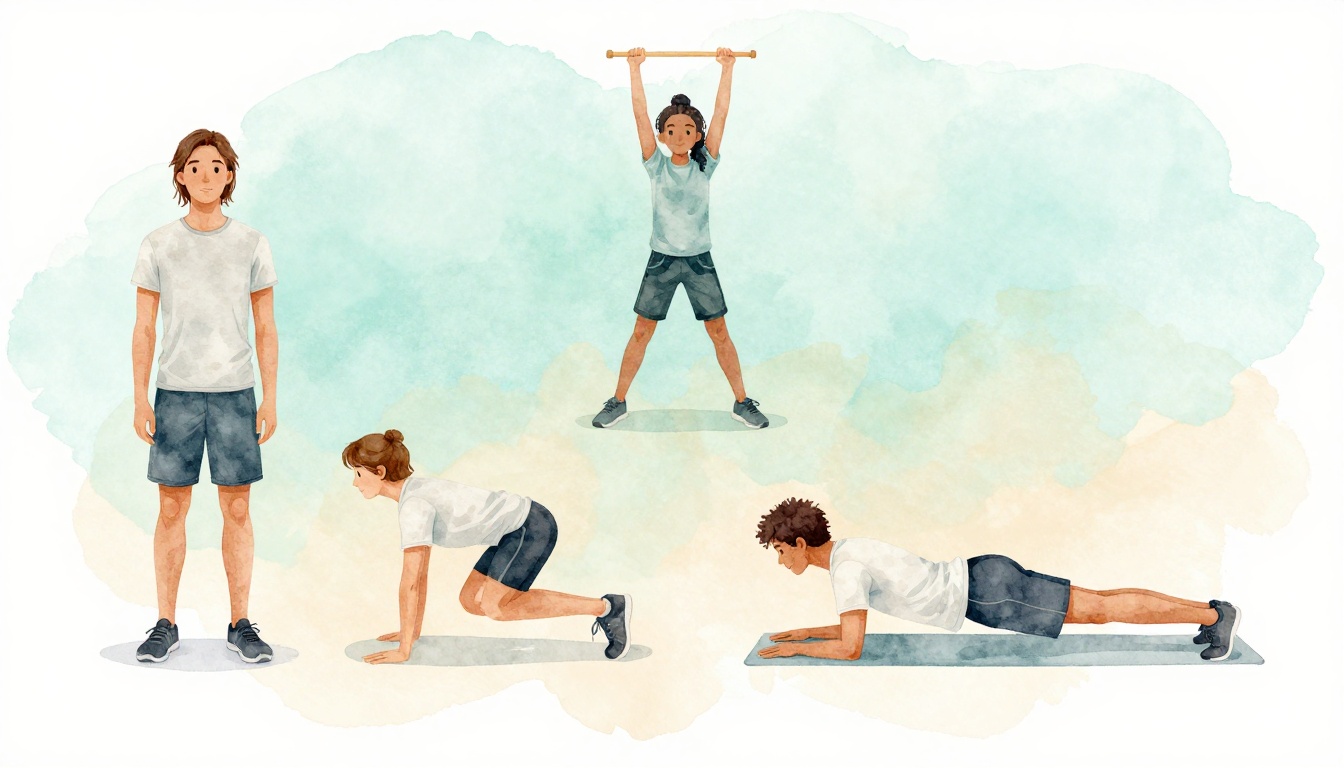
Picture this. You want to get fit, but the gym intimidates you. Weights look heavy. Machines confuse you. Fear of injury holds you back. Best basic exercises for beginners fix that. These bodyweight moves need no gear. They create a solid foundation, teach proper form, and deliver quick confidence boosts. As a result, you stick with fitness long-term.
You can do them at home or on vacation. This guide covers top lower body, upper body, and core picks. Follow simple steps, plus a ready routine. Get moving today and feel stronger tomorrow.
Why Beginners Thrive on Basic Bodyweight Exercises
New to fitness? Start simple. Bodyweight exercises let you build strength safely. You learn form first, which cuts injury risk. No need for pricey gear or gym fees. Plus, you fit sessions anywhere, even during lunch breaks.
These moves hit multiple muscles at once. For example, squats work legs, glutes, and core. Compound actions like that burn more calories than isolation ones. Studies show they raise metabolism too. In addition, they sharpen balance and coordination for daily tasks.
Quick wins keep you motivated. After one week, you’ll notice better posture or easier stairs. Start slow, though. Listen to your body. Rest if sore. Progress by adding reps over time. This mindset sets you up for success. Meanwhile, consistency trumps intensity for beginners.
American Council on Exercise explains compound move benefits. Patience pays off here.
Top Lower Body Exercises to Build Strong Legs and Glutes
Strong legs power walking, stairs, and sports. Beginner leg exercises strengthen them without weights. Focus on these four. They target quads, hamstrings, glutes, and calves. Do them right for real gains.
Bodyweight Squats for Full Lower Body Power
Bodyweight squats mimic sitting in a chair. They pack power into your lower body.
Here’s how:
- Stand with feet shoulder-width apart, toes slightly out.
- Lower hips back and down until thighs parallel the floor.
- Keep chest up, knees behind toes. Push through heels to rise.
Benefits include stronger quads, hamstrings, and glutes. Mobility improves too. Do 3 sets of 10 reps. Modify with partial squats if full range hurts knees. Common mistake: knees cave inward. Squeeze glutes to fix it.
Watercolor illustration of proper squat form.
Alternating Lunges to Boost Balance and Strength
Lunges challenge stability one leg at a time. They sculpt legs evenly.
Steps:
- Step forward with right foot, lower until both knees bend 90 degrees.
- Front thigh stays parallel to floor; back knee hovers above ground.
- Push through front heel to return. Alternate legs.
This builds quads, glutes, and balance. Stability helps prevent falls. Aim for 3 sets of 8 per leg. Try reverse lunges if forward ones strain balance. Avoid leaning forward; keep torso upright.
Glute Bridges for a Toned Posterior
Glute bridges wake up your backside. Lie on your back to start.
Instructions:
- Bend knees, feet flat on floor hip-width apart.
- Squeeze glutes to lift hips high. Form a straight line from knees to shoulders.
- Hold 2 seconds, then lower slowly.
It activates glutes, core, and hamstrings. Posture gets better as a bonus. Go for 3 sets of 12. Advance to single-leg for challenge. Don’t arch your lower back; engage abs instead.
Calf Raises for Ankle Stability
Calves support every step. Raises build them fast.
How-to:
- Stand tall, feet hip-width.
- Rise onto toes, hold top. Lower with control.
- Use a wall for balance if needed.
Stronger calves aid running and jumping. Ankles stay stable. 3 sets of 15 reps. Beginners hold a wall. Skip bouncing; move slow for best results.
These moves transform legs over time. For more on leg strength, check Healthline’s beginner lower body guide.
Easy Upper Body and Core Moves for Total Toning
Upper body strength helps with push doors or carry bags. Core adds stability. These no-weight picks tone without bulk. They improve posture and daily ease.
Knee Push-Ups to Sculpt Arms and Chest
Push-ups build upper body push power. Knees make them beginner-friendly.
Do this:
- Start on knees, hands wider than shoulders.
- Lower chest to floor by bending elbows.
- Push back up, keeping body straight.
Chest, shoulders, and triceps grow stronger. 3 sets of 8-10. Wall push-ups work for starters. Fix sagging hips by tightening core.
Watercolor scene showing knee push-up technique.
Superman Holds for Strong Back Muscles
Supermans counter desk hunch. They fortify your back.
Steps:
- Lie face down, arms extended forward.
- Lift arms, chest, and legs off floor like flying.
- Hold 5-10 seconds, lower.
Back muscles strengthen; posture improves. 3 sets of 8 holds. Lift arms only if full version tires you. Keep neck neutral, eyes down.
Planks for a Rock-Solid Core
Planks demand full core engagement. No crunches needed.
Form:
- On forearms and toes, body in straight line.
- Squeeze glutes and abs. Hold without sagging.
- Start with 20 seconds.
Core power rises; stability too. 3 sets, build to 30 seconds. Drop to knees for ease. Hips dropping? Shorten hold time.
Bird-Dog for Balance and Coordination
Bird-dogs link core and limbs. They boost control.
Instructions:
- On hands and knees, extend right arm forward, left leg back.
- Hold steady 5 seconds. Switch sides.
- Keep hips level.
It stabilizes back and core. Balance sharpens. 3 sets of 6 per side. Skip extension at first. No back arch; brace core.
Mayo Clinic covers core exercise basics. These fit any routine.
Build Your First Workout Routine and Stay Consistent
Ready for action? This 20-minute circuit suits beginners. Do it three times a week. Rest days in between prevent burnout.
Warm up first: March in place 2 minutes. Then circuit:
- Squats: 10 reps
- Knee push-ups: 8 reps
- Lunges: 8 per leg
- Planks: 20 seconds
- Glute bridges: 12 reps
- Bird-dogs: 6 per side
Complete 2-3 rounds. Rest 30-60 seconds between. Cool down with arm circles and leg swings.
Progress by adding reps weekly. Track in a notebook. Pair with protein-rich meals and water. Habit stack: Exercise after coffee. Overtraining signs include constant soreness. Take extra rest then.
Customize for goals. More cardio? Add jumping jacks. Toning? Slow reps. Consistency wins.
Smart Tips to Avoid Injuries and See Faster Results
Form beats speed every time. Warm up 5 minutes to loosen muscles. Breathe out on effort, in on ease.
Prioritize recovery. Sleep 7-9 hours. Gentle walks aid too. Foam roll tight spots if possible. Eat balanced: veggies, lean proteins, whole grains.
Watch for pain beyond mild soreness. Sharp twinges mean stop. See a doctor if needed. Patience matters; results build in weeks.
Celebrate wins like easier squats. Stay hydrated always. These habits speed progress safely.
CDC beginner fitness safety tips reinforce this.
Strong legs, toned arms, solid core. You’ve got the best basic exercises for beginners here. They demand no gear, just effort. Try the routine three times this week. Share your first session in comments below. What’s your biggest win so far?
Build from here. Add light dumbbells later. You can transform your fitness, one rep at a time. Start now.