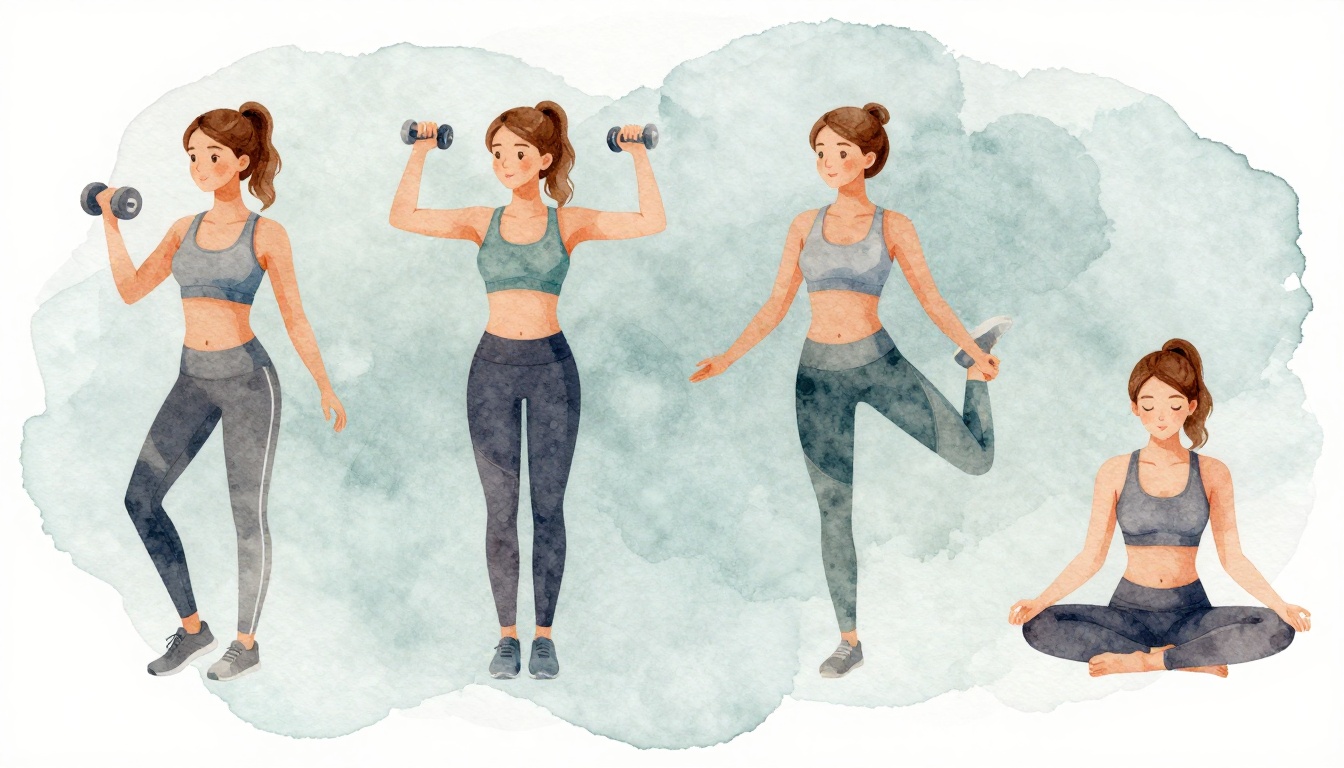
Picture Sarah. She hits the treadmill five days a week. Her legs grow strong. Yet her back aches. Her arms feel weak. She burns out after two months. Sound familiar? Unbalanced routines like hers lead to frustration. They cause injuries too. Recent data shows nearly one in three gym-goers faces overuse injuries yearly because they skip key elements.
A balanced workout routine mixes strength, cardio, flexibility, and rest. It builds full-body fitness. You gain energy. You avoid plateaus. Progress comes faster. Plus, you stick with it long-term. This guide walks you through it step by step. You’ll create a plan that fits your life. Let’s get started.
Figure Out Your Fitness Baseline and Smart Goals
Start here. Know where you stand now. Self-assess strength, stamina, and flexibility. These tests take minutes. No gym needed. They give a clear picture. From there, set goals that match your level.
Personalize everything. Consider your age. Think about your schedule. Check equipment access. A busy parent differs from a student. Small steps build confidence. Track your baseline on paper. Note scores. Review in four weeks.
Easy At-Home Tests for Strength, Stamina, and Flexibility
Try these quick checks. Do them safely. Stop if you feel pain. Warm up first with arm circles and marches.
- Push-ups: Max in 60 seconds. Beginner: under 10. Intermediate: 10-20. Advanced: over 20.
- Plank hold: Time until form breaks. Beginner: under 30 seconds. Intermediate: 30-60. Advanced: over 60.
- Wall sit: Hold with thighs parallel to floor. Beginner: under 30 seconds. Intermediate: 30-60. Advanced: over 60.
- Shoulder stretch: Reach one arm across chest. Measure gap to opposite shoulder. Beginner: over 6 inches. Intermediate: 3-6 inches. Advanced: touch or overlap.
Score yourself lightly. These reveal weak spots. For example, poor plank time signals core needs work.
Repeat tests monthly. You see real change.
Set Goals That Stick: Make Them Specific and Realistic
SMART goals work best. Specific. Measurable. Achievable. Relevant. Time-bound.
Beginners might aim: “Run a 5K in 8 weeks, three times weekly for 30 minutes.” Experienced folks: “Add 10 pounds to squats in 6 weeks.”
Make it fit your life. A parent picks short sessions. An office worker slots evenings. Avoid extremes. All-or-nothing fails fast. Start small. Adjust as you go.
For deeper tips on SMART goals in fitness, check ACE Fitness’s guide to goal setting.
Build Around the Four Key Pillars of Balance
Balance rests on four pillars. Strength builds muscle and bone. Cardio improves heart health. Flexibility prevents injury. Recovery allows repair. Skip one, and you stall.
Aim for a weekly mix. Two strength days. Two cardio. Two flexibility. One rest. This split fights boredom. It cuts injury risk. Bodies thrive with variety.
Strength Training: Get Strong Without Bulking Up
Focus on full-body moves. Do two to three sets of 8-12 reps. Rest 60 seconds between.
Bodyweight options shine for starters: squats, push-ups, lunges, planks. Add dumbbells later. Full-body routines three times weekly suit beginners. Splits work for advanced.
Progress slowly. Add reps or weight weekly. You gain power without bulk.
Cardio That Boosts Heart Health and Burns Fat
Mix it up. Steady jogs build base. HIIT spikes fat burn.
Sessions last 20-45 minutes. Walk briskly if new. Cycle or swim for low impact. Aim for moderate heart rate: you talk but not sing.
Three sessions weekly suffice. Track with a watch. Variety keeps it fun.
Flexibility and Mobility: Move Freely Every Day
Spend 10-15 minutes daily. Dynamic stretches warm muscles. Static holds deepen range.
Target hips, back, shoulders. Try cat-cow pose. Forward folds. Arm circles. Foam roll tight spots.
Consistency pays off. You dodge pulls. Moves feel smoother.
Rest and Recovery: The Secret to Getting Stronger
Rest rebuilds you. Sleep 7-9 hours nightly. Active rest means light walks.
Watch for overtraining: fatigue, sore joints, bad sleep. Take deload weeks: cut volume 50%. Listen to your body. Recovery makes you stronger.
Design Your Weekly Routine That Fits Your Life
Now schedule it. Pick 4-6 days. Alternate pillars. Always warm up 5 minutes. Cool down with stretches.
Busy? Slot 20-minute hits. Use apps like MyFitnessPal for logs. Tweak for travel or kids.
Beginner Sample: Start Simple and Build Momentum
Here’s a 7-day plan. Total 150-200 minutes. Scale as needed.
| Day | Focus | Workout | Time |
|---|---|---|---|
| Mon | Strength | Squats 3×10, push-ups 3×8, plank 3x20s | 25 min |
| Tue | Cardio | Brisk walk or jog | 30 min |
| Wed | Flexibility | Full-body stretches, yoga flow | 15 min |
| Thu | Strength | Lunges 3×10/leg, wall sits 3x30s | 25 min |
| Fri | Cardio | Cycling or stairs | 30 min |
| Sat | Flexibility + light cardio | Walk + hip openers | 20 min |
| Sun | Rest | Recover fully | – |
Build from here. Add intensity every two weeks.
Intermediate Twist: Ramp Up Intensity Safely
Add sets or time. Example: Mon strength now 4 sets. Cardio includes 5-minute HIIT bursts.
Progress measurements weekly. Rest more if sore. This keeps gains steady.
Pair It with Fuel and Track for Lasting Wins
Food fuels workouts. Balance protein, carbs, fats. Drink water often.
Track progress beyond scale. Note energy. Measure waist monthly. Adjust every 4-6 weeks. Plateaus happen. Tweak pillars then.
Current studies confirm tracking doubles adherence rates. See NIH research on exercise tracking.
Quick Nutrition Rules to Support Your Workouts
Eat protein post-workout: eggs, yogurt, nuts. Carbs for energy: oats, fruit.
Sample meal: Breakfast oatmeal with berries. Lunch chicken salad. Snack Greek yogurt. No calorie math needed. Eat to hunger.
Hydrate: half your weight in ounces daily.
Track Progress and Tweak Without Quitting
Journal workouts. Take photos. Log mood.
Clothes looser? Energy up? Wins. Stall? Swap cardio type. Add rest. Small changes restart momentum.
Steer Clear of These Traps That Derail Balance
Common pitfalls sink plans. Fix them quick.
- Skipping warm-ups. Solution: 5 minutes always. Prevents strains.
- Ignoring rest days. Fix: Schedule them first.
- All cardio, no strength. Add weights twice weekly.
- Comparing to others. Focus on your baseline.
- No progression. Increase challenge every two weeks.
- Overtraining signs missed. Rest at fatigue hints.
One reader shared: “I skipped flexibility. Hamstrings pulled. Now I stretch daily. No issues.”
For injury stats and prevention, review CDC’s exercise safety data.
A balanced routine changes everything. You build strength. You boost endurance. Injuries fade. Energy rises. Start with your baseline today. Follow the pillars. Schedule your week.
Stick to consistency over perfection. Grab a notebook. Test yourself now. Share your routine in the comments. What pillar will you add first? Your stronger self waits.